Some stories find you before you fully understand why. Marian MacDowell’s story has been like that for me. The more I read, the more I return to her, not only because of what she helped build here in Peterborough, but because I recognize in her a certain kind of woman I have known all my life: steadfast, resourceful, unwilling to let a worthy idea fall away.
And the more I read about her, the more compelling she becomes.
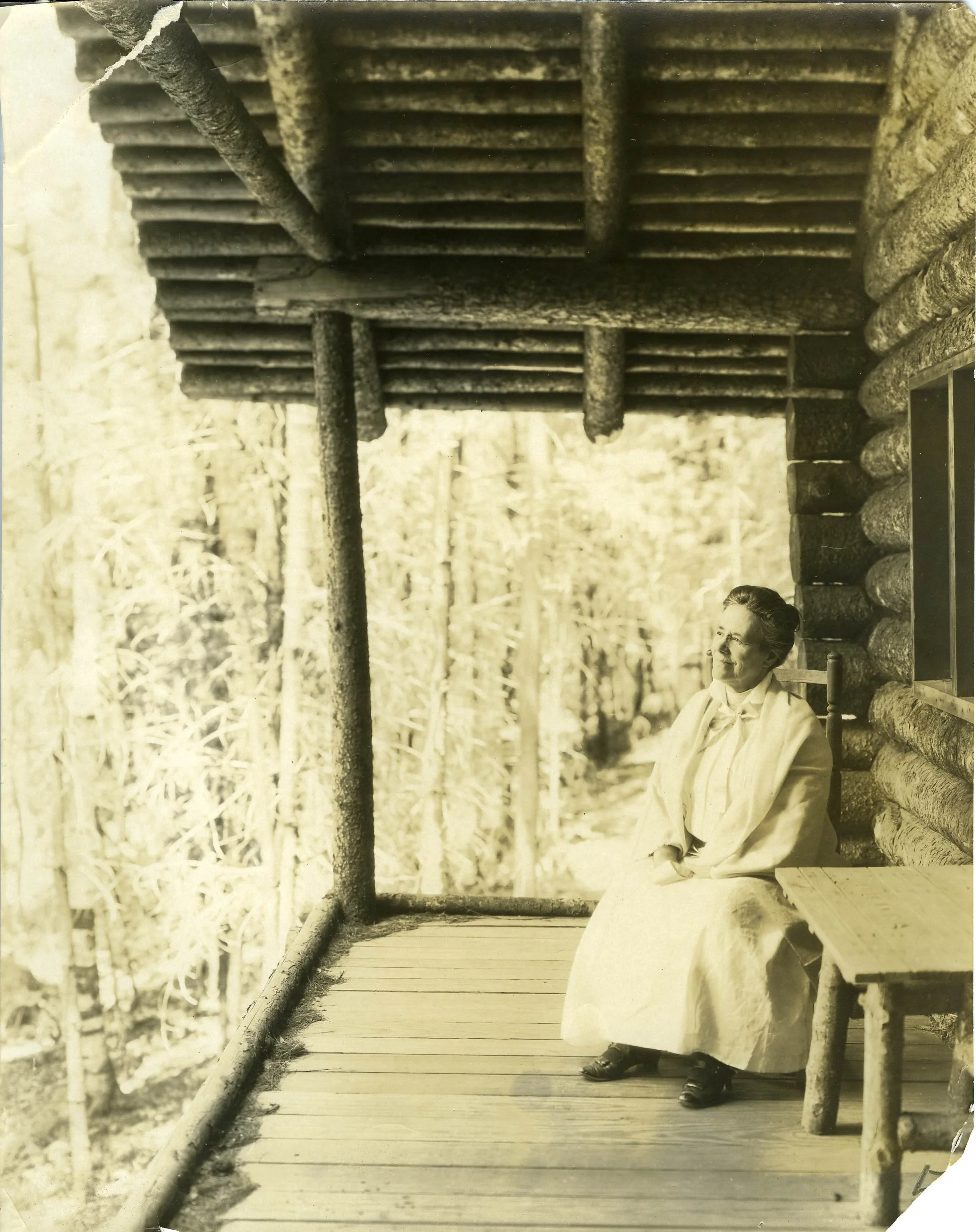
Marian MacDowell, Courtesy of MacDowell
Many people in our town of Peterborough, New Hampshire, know MacDowell as part of the landscape, tucked into the quiet foothills of the Monadnock region, a place spoken of with fondness and pride. But for those who do not know it, MacDowell is widely regarded as the nation’s first artist residency program, founded in 1907 by composer Edward MacDowell and pianist Marian MacDowell and sustained by Marian’s extraordinary resolve after Edward’s death. Today, it has supported more than 9,500 artists across disciplines, offering something increasingly rare: time, solitude, and the companionship of other serious makers.
That is the public story.
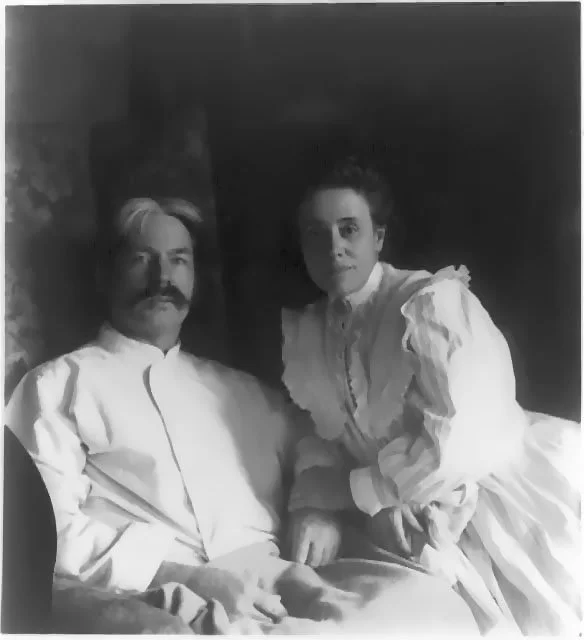
Edward and Marian MacDowell, Courtesy of MacDowell
The private one, and to me the more compelling one, begins with a marriage, a piece of land, and a vision that might easily have disappeared had Marian not refused to let it go. Edward MacDowell was one of the first American composers to earn serious international acclaim. He and Marian bought their Peterborough property in 1896, a former farm that became their summer home, Hillcrest. As his health declined, he began to imagine that the place might someday serve other artists as it had served him: as a refuge for work, solitude, and the kind of creative companionship that sharpens and sustains.
By the winter of 1906, Edward was failing badly. He would die in January 1908, never seeing that vision fully realized. But Marian had already begun to act. In 1907, she deeded Hillcrest, the Peterborough farm and summer home, to the newly formed Edward MacDowell Association, and the first artists arrived that same year. It was a fragile beginning, more hopeful than secure. Yet Marian understood something essential: if the place was to endure, it would not survive on sentiment alone. It would need structure, credibility, money, labor, and relentless belief.
What moves me most is that Marian was not merely preserving Edward’s memory. She was creating an institution, not in theory but in practice. She spoke to women’s clubs and music organizations. She raised funds. She managed the property. She oversaw the enterprise with a blend of pragmatism and devotion that feels astonishing in its stamina.
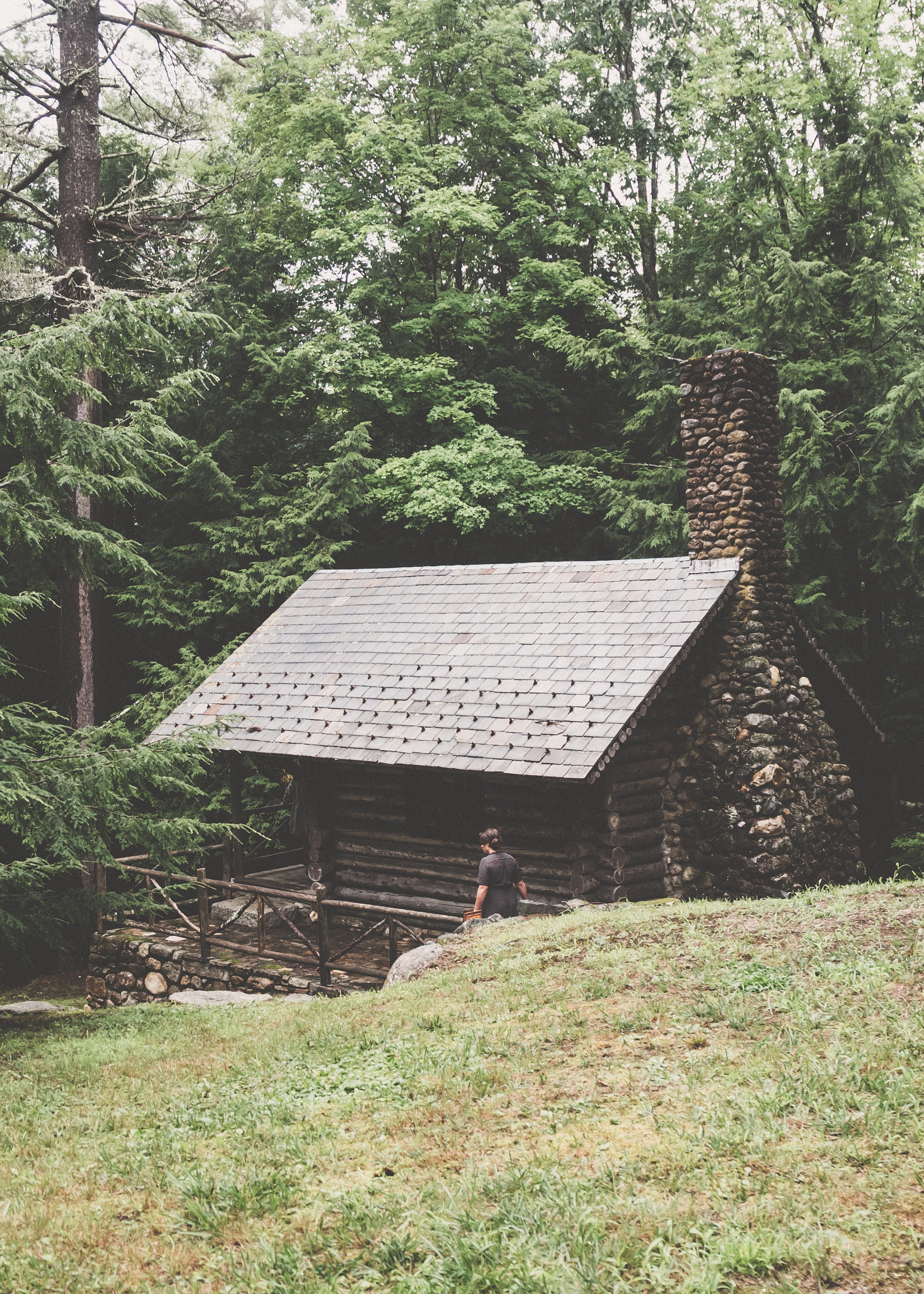
MacDowell was not built only as an idea. It was built as a place, deliberately and patiently, one building and one studio at a time, with privacy, light, quiet, and working conditions understood to be part of the artist’s life. The Log Cabin, the first studio at MacDowell, completed in 1899 as a retreat for Edward and begun by Marian as a surprise, still stands as a tender and practical expression of the larger vision that would follow: a place apart, shaped for solitude, work, and the life of the imagination. It was not only the refuge that mattered, but the details: the right table, the right chair, the necessary light, the hush around the work. She was not only devoted. She was practical, a builder of studios, systems, budgets, and the conditions artists needed in order to work well.
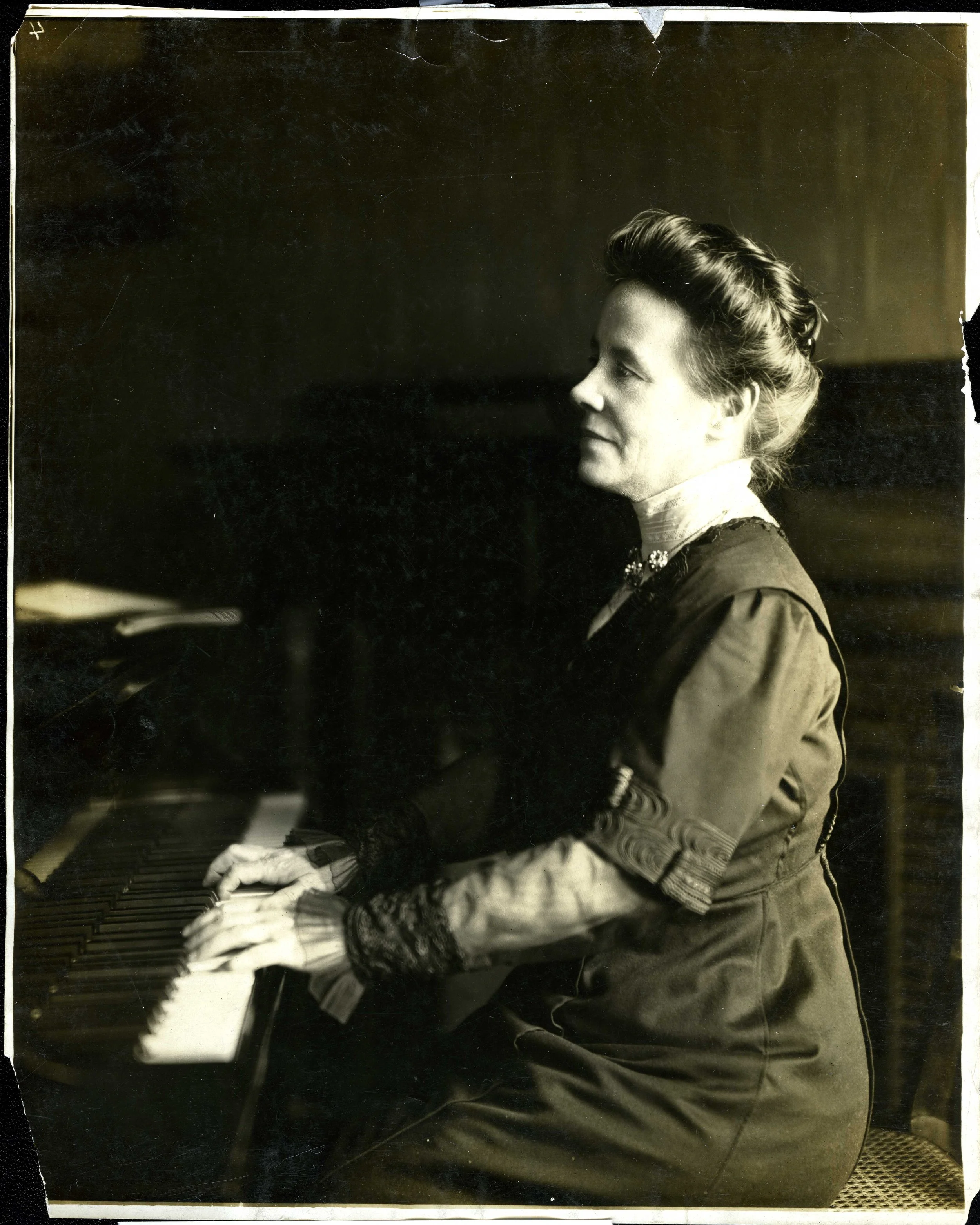
Marian MacDowell, Courtesy of MacDowell; Photographed by Norman Butler
One of the loveliest details in her story is the return to the piano.
At an early talk, someone asked whether she would play. She had not performed publicly in many years. She sat down and played Edward’s music, and that moment became a second life of work. Over roughly the next twenty-five years, Marian gave hundreds of recitals in the United States and Canada, directing the proceeds back into MacDowell. She did not simply advocate for the place. She helped sustain it through music. She also seems to have understood something that still feels wise now: that such a place should be sustained broadly, not held too tightly by a select few. She favored wide support, many hands, many believers. That, too, feels part of what she built.
Edward gave the first vision: an artist’s refuge in the woods, shaped by the belief that creative work needs both solitude and sympathetic company. Marian made that vision durable. She transformed hope into structure, memory into momentum, and grief into one of the most enduring cultural institutions in the country. So many artists have passed through those woods since then. Thornton Wilder worked on Our Town at MacDowell, and generations of composers, writers, visual artists, architects, filmmakers, and interdisciplinary artists have followed. The names matter, of course. But so does the atmosphere Marian protected: the idea that artists deserve serious time, quiet, dignity, and a place set apart for thought.
She died in 1956, the year before I was born.
By the time I might have understood who she was and what she had built, she had already been gone for decades. And yet, reading about her now, I recognize something deeply familiar: the particular quality of a woman who does not wait for ideal conditions, who does not require consensus, who simply keeps going because the thing before her is worth building.
I have known women like that. Many of us have. Perhaps you are one of them.
Marian MacDowell feels to me like one of the originals.
I have written about MacDowell for more than a decade. Each summer, I return with a deepening appreciation for what it represents, not only the work being made there now, but the persistence and imagination that made such a place possible in the first place. Each year, I find myself thinking not only about the fellows in the studios but also about Edward and Marian, and especially Marian, whose determination carried the vision forward when it could so easily have faltered.
That continuity feels especially present this year, as MacDowell honors Anthony Braxton with the 66th Edward MacDowell Medal — another artist added to the long and evolving story of the place Marian worked so hard to protect. Even now, part of what one feels at MacDowell is that the place was made carefully, with an almost moral seriousness about quiet, beauty, privacy, and work.
This year, there are two ways to step into what they built. On Saturday evening, June 27, MacDowell hosts its annual Medal Day Benefit, which directly supports the fellowships that allow artists to spend the time they need there. On Sunday, June 28, the wider community is welcome for Medal Day, the ceremony, the picnic on the lawn, and the rare chance to walk the grounds and visit studios, seeing firsthand the quiet architecture of artistic life.
You may come for the beauty of the grounds, for the pleasure of being part of something local and storied, or simply from curiosity. But you may leave thinking, as I do, about Marian, and about what one woman, with conviction and stamina, can build for generations of artists and supporters she will never meet.
I hope you have the chance to experience this special weekend at MacDowell, the one time each year when the public is invited into its quiet world. The rest of the year, that quiet is kept for the artists at work, just as Marian meant it to be.
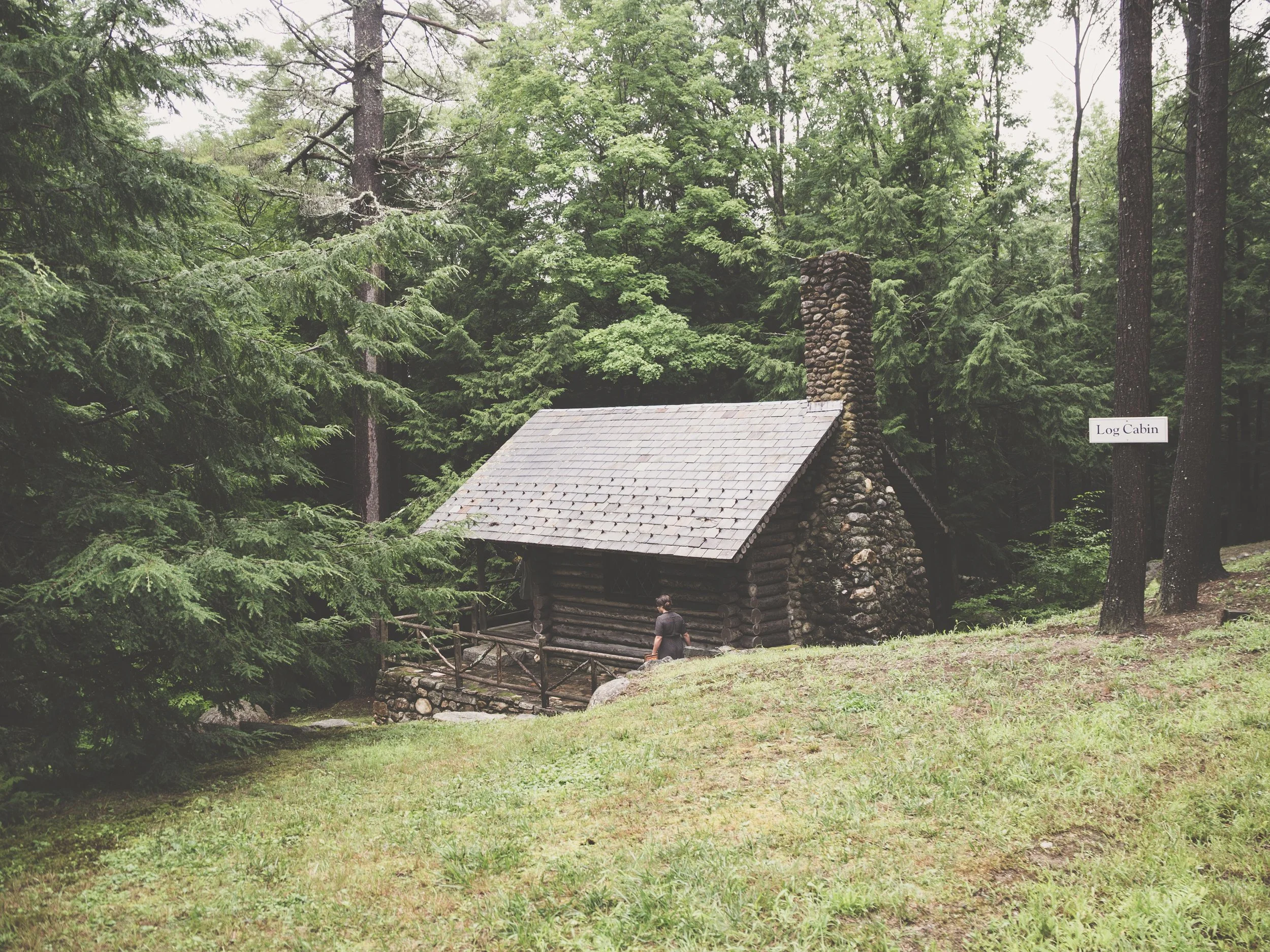
The Log Cabin, MacDowell’s first studio. Photograph by Jeanne Henriques
A note: I came to this story as a neighbor and admirer, not as a historian. I have done my best to represent the history faithfully and welcome correction from those who know it more deeply.
For further reading on Marian MacDowell, I especially recommend the Library of Congress essay, “The House That Marian Built.” Historical background is also reflected in the Library of Congress finding aid for the MacDowell Colony Records and MacDowell’s own institutional history.