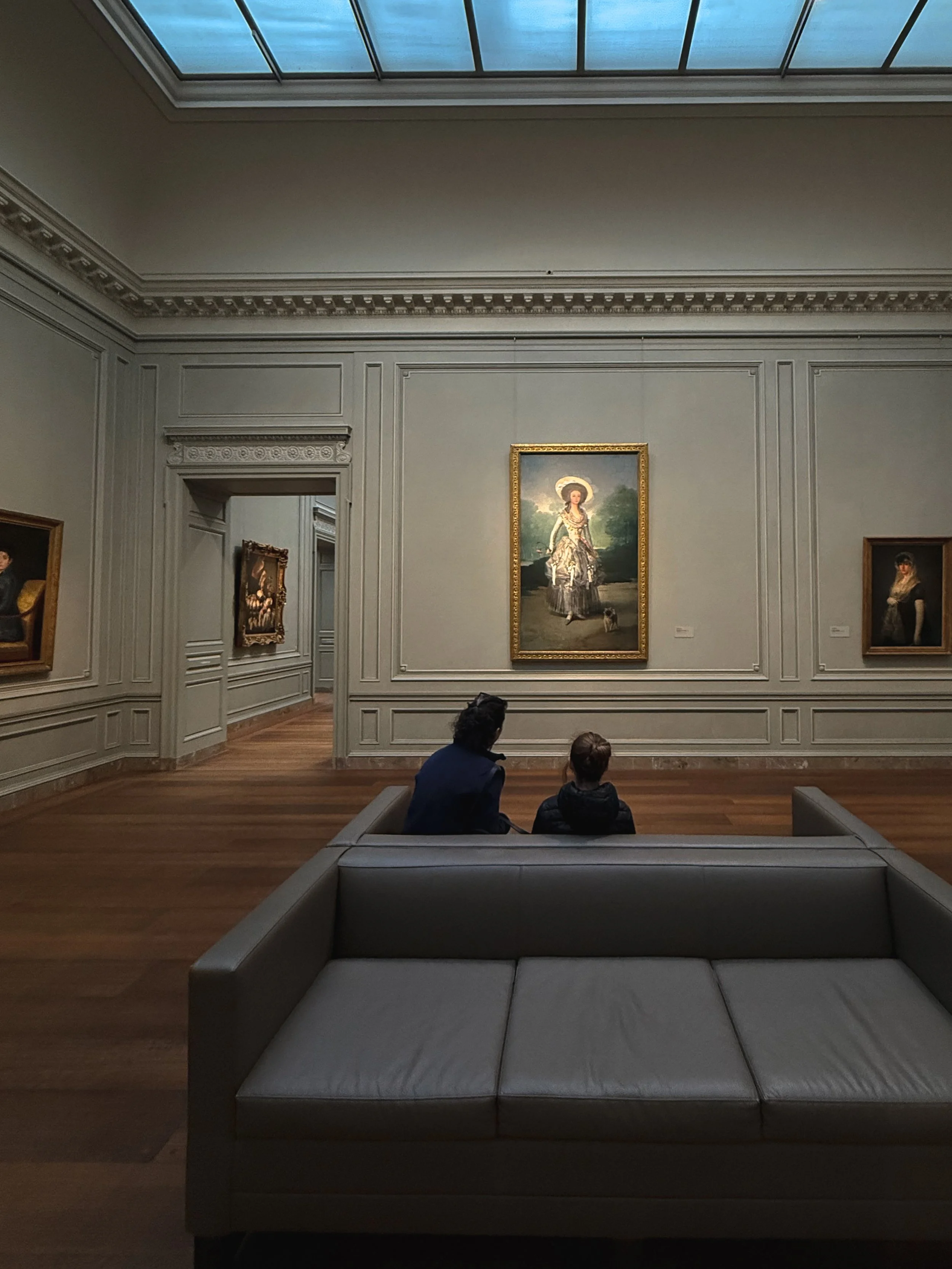
A mother and daughter sat side by side on a bench, looking at a painting. I remember watching as light framed the scene above and below, the surrounding paintings silent witnesses.
They leaned slightly toward one another, as if the act of looking was something shared, something held between them. They had settled into the room, unhurried. The space felt briefly theirs, as though time itself had agreed to wait.
I photographed the act of looking. Even then, I was aware of my own position, standing back, observing the exchange, realizing that by noticing it, I had entered the scene as well.
When I stepped away, the image stayed with me longer than I expected. Not because of the artwork itself, but because of what it revealed about how I look at art. What draws my eye. What causes me to pause. What I carry with me after I leave the room.
Living at Tahilla Farm has sharpened that same way of seeing.
After eight years here, I feel the landscape changing in small, steady ways. The slightest nuance can cause me to pause. This morning, it was a stand of river birch trees we planted five years ago. They rise together now, pale trunks catching the light, nearly shimmering against the winter white. As I crest the road toward the house, they stand like a quiet marker. Something familiar, something steady.
Just beyond them sits a single wooden bench we placed last fall, set slightly off-angle between two birch trees outside the carriage house. Newly settled and still finding its place, it feels like an invitation.
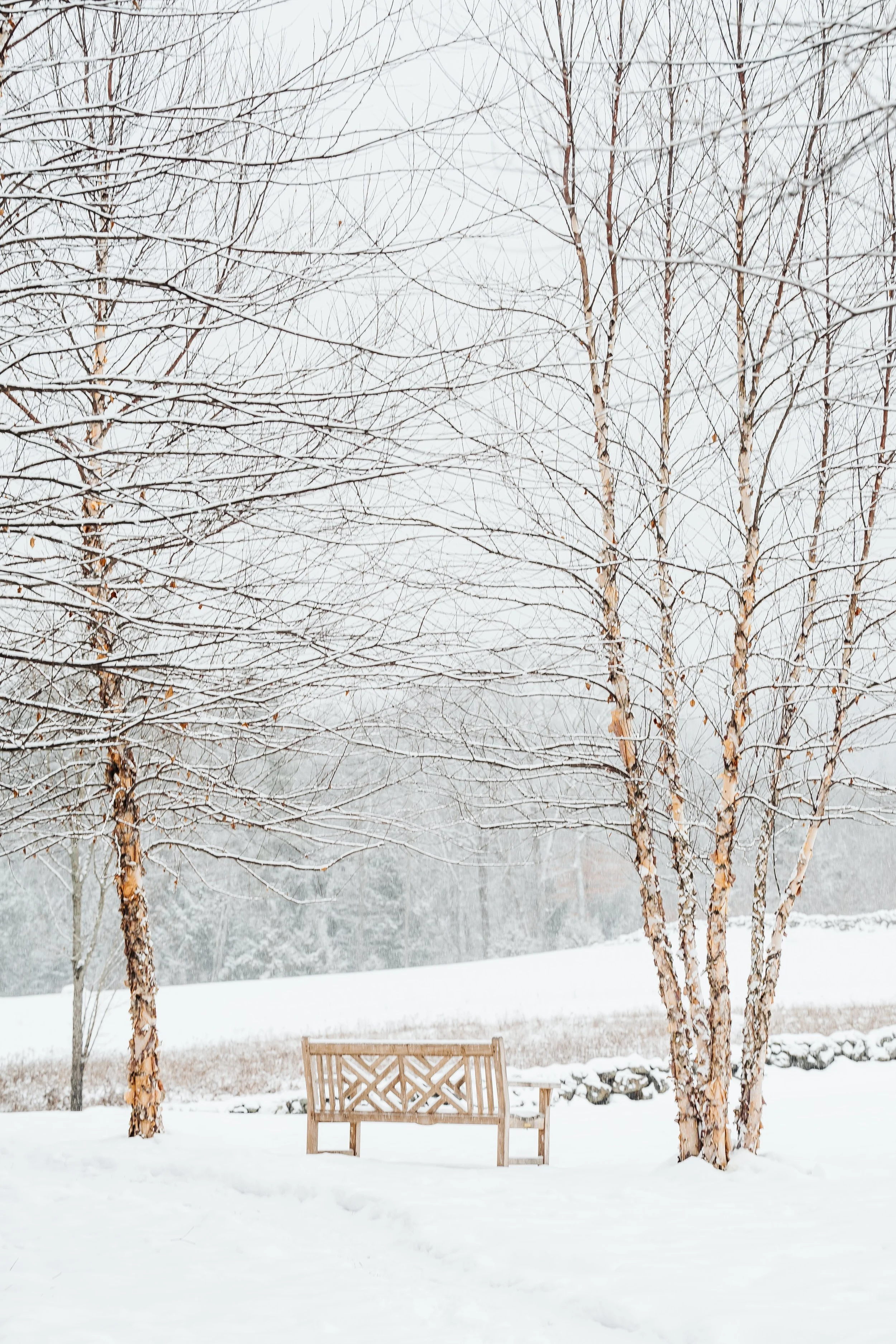
It faces a muted winter view now.
Fields blanketed in snow.
Trees bare.
The light pale and low.
It feels far removed from the upholstered benches of a museum gallery, and yet I recognize something familiar in it.
When I sit there, I am not looking at a framed work or a contained image. I am looking out into weather, distance, and time. Still, the posture is the same. An invitation to stay. Permission to be still long enough for something to surface.
I am beginning to notice how much sitting matters to the way I see.
Over the years, I have moved through museums and galleries with my camera, drawn less to documentation than to atmosphere. I photograph paintings, benches, doorways, expanses of wall, the way people inhabit a room. I am just as interested in the spaces around the art. How it is approached. How it is held. How it quietly enters a life.
When I give myself time before a painting, my attention rarely stays on the surface alone. I begin to imagine the room where it took shape. The quality of light. The studio walls. Who else might have passed through. What life unfolded just beyond the frame. I often find myself looking through a painting as much as at it, letting it lead me outward into imagined spaces and inward into memory.
This is why I am drawn to studios and the places where work is made. Seeing where art comes into being adds another layer to my understanding. It reminds me that art is shaped not only by intention, but by environment. By solitude. By rhythm.
By the quiet persistence of daily life.
I have come to appreciate this deeply through places like our local artist residency, MacDowell, where rooms and landscapes feel inseparable from the work they hold.
The wooden bench outside now feels connected to all of this. It is new, but already patient. It waits. It asks nothing. It offers a place to sit and look—whether at a winter field or at a thought still forming.
Perhaps that is what I am always seeking when I stand before a painting or sit within a landscape. A place where looking becomes spacious. Where time softens. Where something unspoken has room to appear.
And it makes me wonder.
When you pause before a painting,
or sit in a place that asks you to stay,
what do you notice first?
Where does your looking lead?