The stories we plant…
It is nearly the end of July now, and the garden has moved on in the way gardens do. The alliums that stood so tall in June have softened. Some have faded into airy seed heads; others still hold their shape, more delicate now, less fireworks than memory. The foxtail lilies have had their moment. The garden is turning toward high summer, toward dahlias and grasses, heat and humming insects, and the deep green fullness of the season.
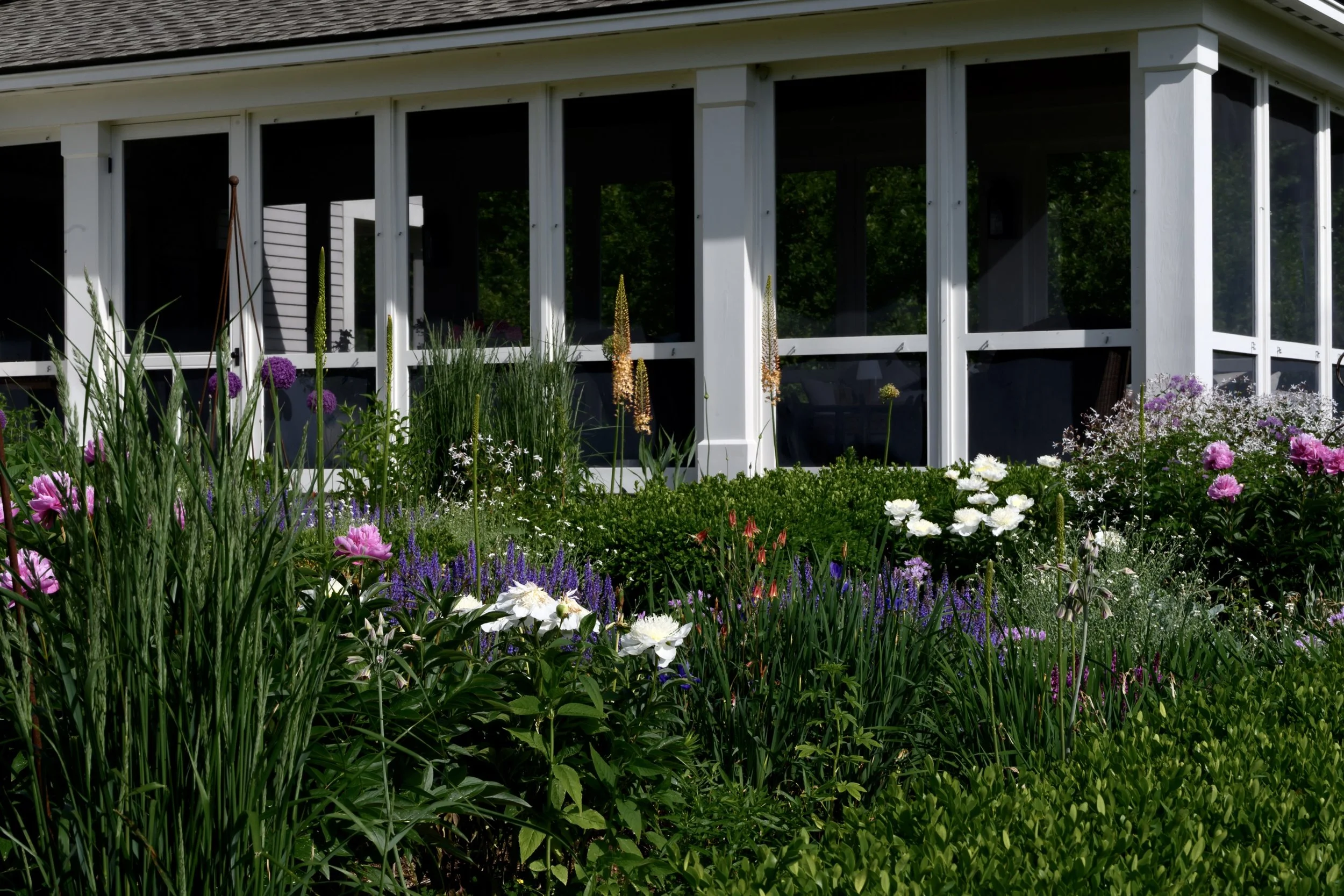
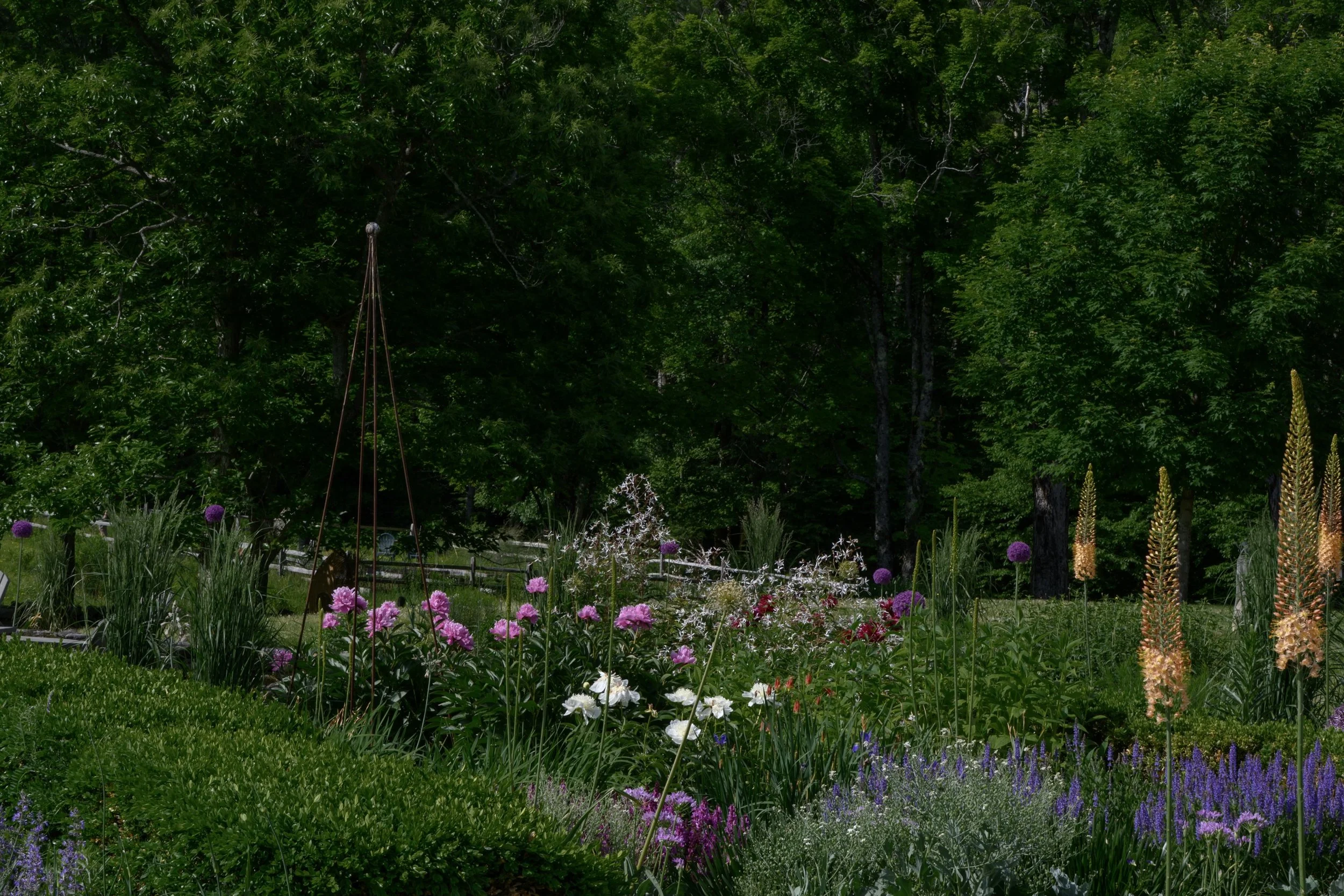
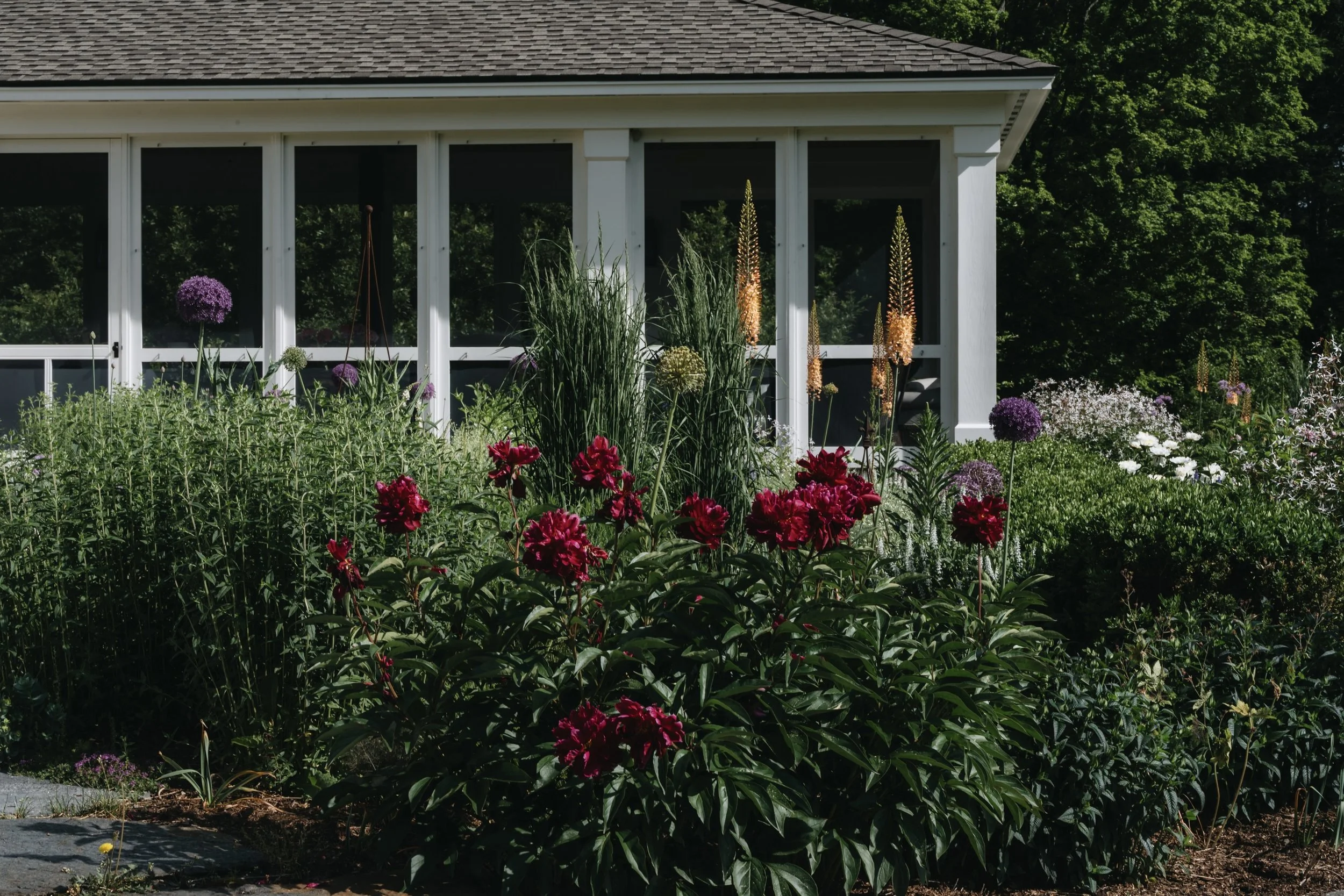
But I keep thinking back to June, to the way the alliums rose through the garden this year, not all at once, but in waves. Tall globes of purple and lavender appeared across the beds, some opening, some fading, some still tight with possibility. They seemed to move through the garden like music. Not fireworks this time, but a symphony.
In the fall of 2023, I planted Ambassador alliums with one June day in mind: our daughter’s wedding. I imagined them rising in early summer, round and purple and full of mischief, as if the garden itself had planned a celebration. I wanted them to appear as though they were popping up like fireworks, small bursts of joy in honor of the day. And they did. By June 2024, the alliums stood among the garden beds like exclamation points, giving the day a lift, a bit of wonder, a sense that the garden had joined us in celebration. The tent came and went. The guests gathered, laughed, danced, and moved on, but the alliums remained in my memory, tied forever to that June wedding and the tenderness of watching a daughter step into a new chapter of her life.
Two years later, I found myself looking at alliums again, only now they felt different. In the fall of 2025, I planted more. Many more. Drumstick alliums, Ambassador alliums, Allium ‘Eros,’ foxtail lilies, and daffodils with names like small poems: ‘Thalia,’ ‘Ice Follies,’ ‘King Alfred,’ ‘Salome,’ ‘Poeticus,’ and ‘Rip Van Winkle.’ Into the ground they went before the first frost, along with Eremurus ‘Cleopatra,’ each bulb a small promise hidden beneath the surface. This time, I was not planting in anticipation of a wedding. I was planting in the afterglow of a birth.
Our granddaughter, Sloane, had arrived in October. At the time, I was renting a house in Manchester-by-the-Sea, helping my daughter and her husband, holding the baby, learning her small rhythms, and becoming familiar with the astonishing newness of her. Every few days, when I could, I would drive the hour and a half back to Tahilla Farm to plant bulbs. It was a strange and lovely shuttling between worlds: one held the newborn hush of a rented house by the sea, the soft weight of her in my arms, and the tender care of a daughter becoming a mother; the other held the open fields of home, the beds waiting to be planted, the urgency of autumn, and my own hands working quickly before the ground hardened. I would arrive at the farm, pull on my gloves, and begin placing bulbs into the soil. Here, beside the stone wall. There, near the new garden. A drift of alliums. A line of foxtail lilies. Small promises hidden beneath the surface.
At the time, I am not sure I fully understood what I was doing. I was simply planting. But gardens often understand before we do.
In June, during a Tahilla Gathering, I walked with a small group through the garden and began telling its story. We moved slowly through the beds and borders, through the parts of the garden that have come together over time through instinct, trial, accident, persistence, and love. I spoke of the plants we have chosen, the lessons learned from deer and drought and sun, and the way a garden teaches you to pay attention. I spoke of the alliums from the wedding, how they had felt like fireworks. Then, standing there among the blooms, I found myself saying something I had not quite articulated before: this part of the garden is for Sloane.
It surprised me a little, hearing it spoken aloud. But as soon as I said it, I knew it was true. The bulbs I planted that autumn were not only bulbs. They belonged to the days when I was driving back and forth between the sea and the farm, between daughter and granddaughter, between helping and planting, between the immediate tenderness of a new baby and the long, slow faith of a garden.
Looking back from late July, I see the alliums of June more clearly. Some stood tall and full, round globes held high above the garden. Others were just opening, still tight with possibility. A few had begun to soften and fade, their structure becoming more delicate, more intricate. Together, they created a rhythm across the beds, each one arriving in its own time.
Perhaps that is what I love most. A garden does not remember in the way we do. It remembers through return, through bloom, through the sudden appearance of something planted long before, when life was moving quickly and the heart was full. The alliums remind me that beauty can be planted in one season and understood in another. They remind me that celebration changes shape over time. First fireworks, then music. First a wedding, then a birth. And somewhere in between, a grandmother with muddy hands, pressing bulbs into the earth before winter.
I find myself imagining Sloane here one day, walking through the garden with little hands stretched toward the giant alliums standing tall above her, those purple globes hovering like something out of a storybook. I can see her reaching for them while they shiver slightly in the June air, just beyond her grasp. And then, because time has a way of doing this, I imagine the day she stands taller than they do.
There is a tree for her, too: a brilliant red maple, planted in the fall of her birth, tucked into the fern paddock as if waiting quietly to welcome her back to the season in which she arrived. One day, I hope to walk her there and tell her, this tree was planted when you were born. I hope she will place her hand against its bark and feel, even before she understands it, that she belongs to a story already growing around her.
By the time I am writing this, it is nearly the end of July. Our grandson Fletcher has come and gone from his first weeks at Tahilla Farm, leaving behind his own small trail of memories. I will save those for another day. Our grandson Cooper, living in Australia, has his own tree here too, an oak we planted when he was born. So perhaps this is not only Sloane’s garden story, but the beginning of something larger: the story of grandchildren and gardens, of the way a place begins to hold them before they are old enough, or near enough, to remember it for themselves.
This is how a garden becomes personal. Not all at once, and not always by design. It gathers our stories quietly. It holds the occasions we planned for, and the ones we could never have imagined. It keeps time differently than we do, through roots and rings, through bulbs and bloom, through the small miracle of return.
I will always remember the alliums of 2024 as the wedding flowers that rose like celebration. And I will remember these alliums, and the red maple in the fern paddock, for Sloane: for the autumn she arrived, for the drives between Manchester-by-the-Sea and home, for the small act of planting while learning the shape of a new love, for the new way of being a grandmother she was opening in me, and for the girl she will one day be, standing tall among all that was planted in love.
The garden has a way of making room.
In June, it was full of alliums. Not fireworks this time, but a symphony.