The Edge
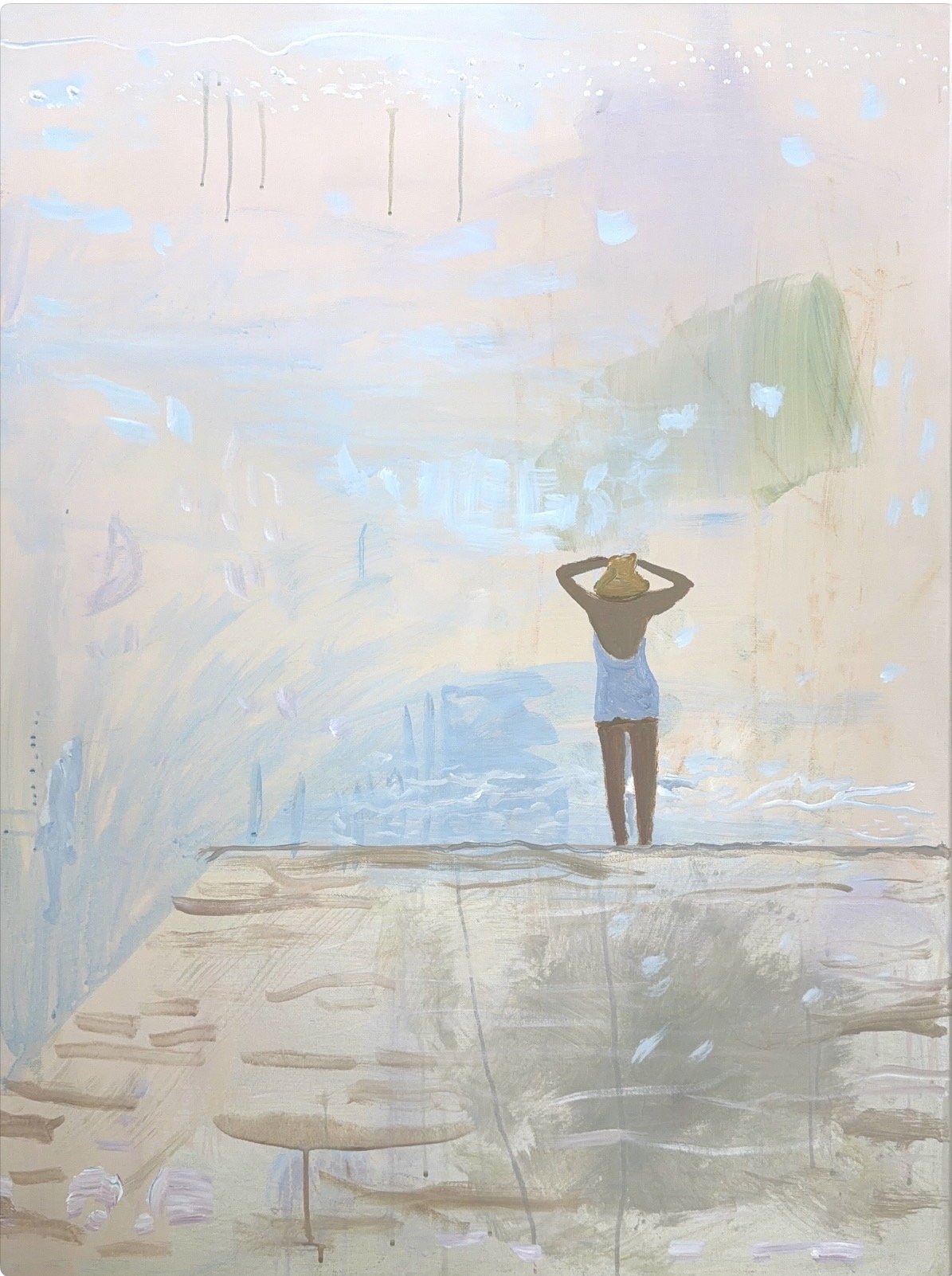
The Edge by Joan Hanley.
Before I knew the painting in person, I knew the feeling of it.
A woman, her back to us, hands lifted to her hat, stood before something luminous and unresolved. I found her first on a screen, the way we find so many things now: scrolling past, then stopping. Joan Hanley had painted her, and something in me recognized the pose immediately. I asked if I could come to the studio to see whether what I imagined was true.
It was, and more.
I grew up by the sea in Manchester-by-the-Sea, Massachusetts, where the Atlantic arrives with a certain authority, cold and clarifying. When I followed Mr. H across the world to Sydney, the sea became something else entirely, warmer, more golden, the light doing things to water that still catch me off guard after all these years of returning. Our family put down roots there. Our son and grandson call it home. Every year I find my way back, and every year I find my way to the water’s edge, to the ocean pools built into the rock face along that coast, those saltwater rectangles held between the wildness of the sea and the safety of the shore. In-between places. Protected but open. Facing out.
Joan’s painting lives in that same space.
I have stood at an edge like this many times: before a child arrived and rearranged everything, before a new country, a new home, a new version of myself assembled quietly from what came before. Before marriage, before loss, before the next decade showed up without asking. The edge is not one place but many, the same threshold returned to again and again, worn smooth by the going back.
What strikes me in this painting is not drama, but softness. The palette carries the colors of an Australian summer morning — pale gold, washed blue, that particular luminous haze that exists on a beach not far from where we lived, a beach that still waits for me even though we haven’t lived there in nearly twenty years. The woman at the center is not poised to leap. She is thinking. She is holding her hat and feeling the light and deciding nothing yet. The edge here is not a precipice. It is a soft edge, one that holds you in place while you gather what you need — to step forward, or to stay a little longer, which is sometimes the braver thing.
I found the painting in Joan’s studio in the foothills of the Monadnock mountains, the landscape I now call home. We sat with hibiscus tea and talked about color and stillness and the kind of attention that making art requires, the same quality of attention the water’s edge requires. Slow. Receptive. Willing to be changed by what you see.
That conversation is part of what brought us to an upcoming Tahilla Gathering. On September 12, Joan and I will spend a day together at Tahilla with a small group of people, making marks, sitting quietly with the land, writing small poems in response to what we notice. The spirit of the day is much like the feeling Joan painted here: soft and curious, open and unhurried. A day of relaxation, wonder, and discovery.
Come stand at the edge with us.